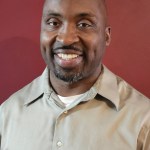

Elbert Costello Sr. was 22 when violence sent his life in one direction. His son was 22 when violence ended his.
Costello went to prison in 1997 after being convicted of voluntary manslaughter. His son’s mother was pregnant when he was incarcerated, and the first time he held Elbert Jr. was during a prison visit.
Looking back, Costello sees more in that moment than a father meeting his son in an unlikely place.
“That shouldn’t have never been the first place that he met me at,” he said. Even then, he now recognizes, his choices were beginning to rub off on his son.
Returning from prison in December 2000, Costello tried to work legitimately. But the jobs he found paid little and he had children to support. So, for nearly a decade, he moved between the life he wanted and the life he knew, while Elbert Jr. grew up watching him.
Costello says he knows his choices influenced his son. Elbert Jr. would eventually experience incarceration himself. He came home and, like his father, returned to the streets.
Elbert Sr. eventually found his way out of the game. His son didn’t.
In 2010, Elbert Sr. walked away from the game. His son never got that chance. On Aug. 18, 2019, just weeks after turning 22 — the same age his father had been when he went to prison — Elbert Jr. was shot and killed.
By then, Costello had begun giving back, working with others in the community to help people make different choices. He had found his own way out and was trying to help others do the same. But he hadn’t been able to save his own son.
The loss only deepened his commitment.
Today, as a supervisor with Cure Violence ICT, Costello uses the life he lived — and the loss he carries — to reach people at risk of becoming involved in the same violence that shaped his family.
Dr. Kevin Harrison says that is precisely what makes Costello effective.
“His past isn’t simply something he survived; it has become a tool he uses to help someone else have a different future.”

Reaching People Before Violence Happens
For Costello, that different future is often decided in conversations most people never hear.
He estimates about 80% of his work with Cure Violence ICT involves situations where violence could potentially occur. Much of his work has focused on Plainview and South City, including neighborhoods where he grew up.
Sometimes he hears that trouble is brewing. Other times, someone calls. Costello or another member of the Cure Violence team reaches out to people they already know, trying to get between the conflict and what might happen next.
Costello said many disputes grow from little more than rumors or “he said, she said” — people reacting to what they’ve heard without ever talking directly to one another.
That’s where relationships matter.
Costello isn’t approaching those conversations as someone who has only studied violence prevention. The people he talks to know his history. He knows the language, the pressures and the choices they’re facing because he has faced many of them himself.
Harrison said he has watched that credibility help Costello defuse potentially dangerous situations.
In one instance, Costello helped intervene when plans were circulating for a mall takeover that Harrison feared could become dangerous. The takeover never happened.
Harrison said Costello has also mediated conflicts that might have ended in gun violence.

Showing Them Something Different
Costello knows stopping a fight or preventing retaliation addresses the immediate danger. But he believes breaking the cycle also means giving young people something different to move toward.
That is part of what struck him about a photograph taken during a visit to Wichita’s Juvenile Detention Facility. Four members of the Cure Violence team sat across from four young people, sharing their experiences and talking about choices.
When Costello saw the photograph later, he immediately recognized the generations reflected in it.
“It just looked like a younger version of us talking to an older version of us,” he said.
But Costello doesn’t believe breaking the cycle happens simply by sitting across the table and telling young people where their choices might lead. If they are going to choose a different path, he believes they also need to see where that path can take them.
That’s why he questions programs such as Scared Straight that take young people into prisons to frighten them away from crime. Why, he asks, don’t communities put just as much effort into showing them what else their lives could look like?
“Why don’t we have programs to show kids what it looks like to go to college around here?” Costello asked. “Or what does it look like to be successful?”

For Costello and the Cure Violence team, that means doing more than talking.
Harrison said he has watched Costello work with at-risk teens and help connect them to opportunities that can move their lives in another direction. Some have gone on to graduate from high school, attend technical school, enter the military or pursue entrepreneurship.
It’s an important part of the Cure Violence approach: stopping the immediate violence, but also helping people see and reach alternatives to the life that may have put them at risk in the first place.
Costello tries to do the same thing with his own family.
He has 12 grandchildren, including Elbert Costello III, his late son’s son. After watching one generation grow up surrounded by the life he was living, Costello is intentional about what the next generation gets to see.
“A lot of what we see in our community, we think that’s it,” Costello said. “I want to show them that there’s a bigger world out there other than what we just see right in our community.”
Costello hopes that bigger world is something more young people in Wichita will get a chance to see.
Cure Violence ICT is still a relatively new effort in Wichita, and its long-term impact remains to be seen. But Harrison believes people like Costello are central to its potential — people with the relationships and credibility to reach individuals who may not respond to traditional institutions or programs.
For Costello, the work continues one conversation, one conflict and one young person at a time.