The Wendell Phillips neighborhood—anchored by the American Jazz Museum, Negro Leagues Baseball Museum, the Black Archives, and the storied Mutual Musicians Foundation—has long been a crossroads of Kansas City’s Black history. Today, it’s also the proving ground for a new wave of resident-centered redevelopment led by the Urban Neighborhood Initiative (UNI).

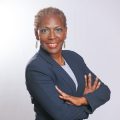
At the center of UNI’s transition is Sakina Moore, a Kansas City native who rose from community engagement director (2022) to chief operating officer and, as of Aug. 1, 2025, interim president and CEO. Moore’s path tells you a lot about UNI’s culture: people who listen first, build trust block by block, and then scale what works.
“We’re small but mighty,” she says, describing a team of roughly 10 full-timers plus a roster of part-time contractors that deliver youth programs, mobile resource pop-ups, and a growing pipeline of affordable homes in Wendell Phillips.
Moore emphasized UNI’s holistic approach: “We can’t take care of the whole family without actually taking care of the whole family.”
That means pairing bricks-and-mortar projects with programs for kids and teens, neighborhood resource fairs, and a mobile engagement lab that brings the party—and the services—to the block.
From Engagement Lead to Interim CEO
When Dr. Jamee Rodgers took the helm in late 2021, he brought Moore on to lead community engagement. Within a year she was COO overseeing day-to-day operations. This summer, after Rodgers’ four-year tenure concluded, UNI named Moore interim CEO.
Moore’s personal Kansas City story—big family gatherings at her grandmother’s Blue Hills home, neighbors who looked out for one another—shapes how she frames UNI’s mission. The goal, she says, is to rebuild that connective tissue while expanding pathways to homeownership and stability for families who’ve been squeezed by the city’s affordable-housing shortage.
What UNI Is—and How It Started
UNI was launched in 2012 as one of Kansas City’s most ambitious place-based efforts to counter disinvestment east of Troost. It serves a two-square-mile area across 10 neighborhoods, with priorities that can be summed up as: engage residents, elevate opportunity, educate youth, and encourage mixed-income housing.

The Urban Neighborhood Initiative’s founding leader was Diane Cleaver, who directed the program for a decade before handing the reins to Rodgers. Under Cleaver’s leadership, UNI set out to achieve comprehensive revitalization of its service area—a long-term commitment that demanded patience and perseverance given the depth of disinvestment east of Troost.
The organization began by listening. Through extensive neighborhood sessions across its 10 target communities, UNI identified resident priorities and translated them into early programming. Those first steps emphasized community engagement—block parties, resource fairs, and neighbor‑to‑neighbor connections—that continue to be hallmarks of UNI’s work today.
In 2016, UNI joined the national Purpose Built Communities network, an affiliation that spurred a more ambitious expansion into housing and real estate development, and later into home repair, while sustaining its focus on resident wellness and engagement.
The Projects Taking Shape Right Now
Crescendo Townhomes (39 units)
The most visible sign of momentum is Crescendo, a 39-unit townhome development rising near 24th & Highland. UNI and partner Brinshore Development closed on the project this summer and officially broke ground in early October. Brinshore is a national real estate company specializing in mixed-income residential development. Their current portfolio exceeds 11,000 residential units in 16 states.
The project features a mix of 1- to 3-bedroom units across 9 three-story townhome buildings and a community building that will offer a location for supportive services, a community room for resident use, and a patio facing a butterfly garden. The aim: high-quality homes affordable to families earning up to roughly 80% of area median income.
The Former Wendell Phillips School → “Unity Campus”
Across the street, UNI has acquired the old Wendell Phillips Elementary from Kansas City Public Schools and is redeveloping it into a multi-phase community hub sometimes referred to as the Unity Campus. Plans with regional partners include mixed-use spaces for youth mental-health services, transitional living for young people facing housing insecurity, partner-organization suites, community rooms, and green-infrastructure improvements that knit the site back into the neighborhood.
A Pathway to Homeownership—Powered by Federal Investment
On the single-family side, UNI is advancing a “pathway to homeownership” program that builds or renovates 3-bed/2-bath homes in Wendell Phillips and supports residents in renting while they repair credit, line up down-payment help, and ultimately assume the loan. UNI already owns 100 empty lots in the Wendell Phillips neighborhood they can build homes on.
Some homes they’ll sell, the others they may rent under the Pathway to Homeownership program. Moore stressed that UNI’s approach blends flexibility with fiscal discipline—selling homes replenishes capital, but renting to readiness keeps the door open for families not yet mortgage-ready.
Congressman Emanuel Cleaver secured $4 million in Federal Community Project Funding to help kick-start this program. So far the organization has completed 25 new and renovated homes with 40 in the pipeline.
Programs That Meet People Where They Are

If housing is the backbone, engagement is the heartbeat on UNI’s programming.
The organization’s Mobile Leadership and Arts Building (the “M-LAB”) is a 30-foot trailer that unfolds into a block-party-ready stage, complete with screens, game consoles, a bounce house, and concessions—an all-ages magnet that helps UNI canvas neighborhoods, host resource fairs, and bring partner agencies directly to residents. In the summer months, Moore’s team is “somewhere different every two weeks,” rotating through UNI’s 10 partner neighborhoods and, by request, rolling beyond their footprint to places like Independence and KCK.
UNI’s youth portfolio carries the same “do what the partner needs” DNA. Under a STEAM-plus umbrella (science, tech, engineering, arts, math—plus equity and entrepreneurship), programs include coding, culinary arts, robotics, social-emotional learning through UNI’s “Universal Connections” curriculum, and a Writing Lab that has helped 3rd–5th graders author 150–200 student books now shelved in school and public libraries.
Taken together, these programs underscore UNI’s belief that community transformation requires more than bricks and mortar. By pairing housing development with creative youth programs, neighborhood gatherings, and mobile outreach, UNI is putting its holistic model into action—supporting family members at every stage of life.
The Leadership Moment
Moore steps in at a hinge moment: big capital projects are moving from plan to construction and a 100-home pilot has dedicated federal dollars for affordable housing. Her mandate is to keep the construction and the community moving in the same direction, without losing the credibility and trust the organization has built during it 13 years serving the community.
Moore is also keenly aware that doing the work isn’t enough if people don’t see it. “We’re trying to get better about telling our story,” she says. That’s a challenge many service-heavy nonprofits face, with the louder organizations not always delivering the most.
What to Watch Next
- Construction milestones on Crescendo’s first phase and early tenanting timelines.
- Design and partner announcements for the Unity Campus as interior build-outs proceed and tenant mix comes into focus.
- The completion and rental of more of the 100-home pilot’s, especially data on time-to-purchase for families in the rent-to-own pathway and how down-payment assistance is braided in.
- Neighborhood-level engagement metrics from the M-LAB season (attendance, resource referrals, youth sign-ups), which will speak to whether the holistic model is compounding benefits across housing and human services.
For now, UNI offers a simple, powerful snapshot: a school once mothballed is on its way to becoming a community hub; new townhomes are climbing out of long-vacant land; and a homegrown leader who knows the difference between optics and outcomes is steering the work. It’s a story of persistence and renewal: a neighborhood reclaiming its future, projects once stalled finally breaking ground, and a leader rooted in the community determined to keep progress moving forward.